








Agenda 2026-2027: The RFS Increases Domestic Diesel Supplies and Saves Consumers Money
 Editor’s Note: This is part of a series where the top international industry leaders in the bioeconomy outline the key issues, opportunities in, and perspectives for, the bioeconomy during 2026-2027.
By Donnell Rehagen, CEO, Clean Fuels Alliance Americas
Special to The Digest
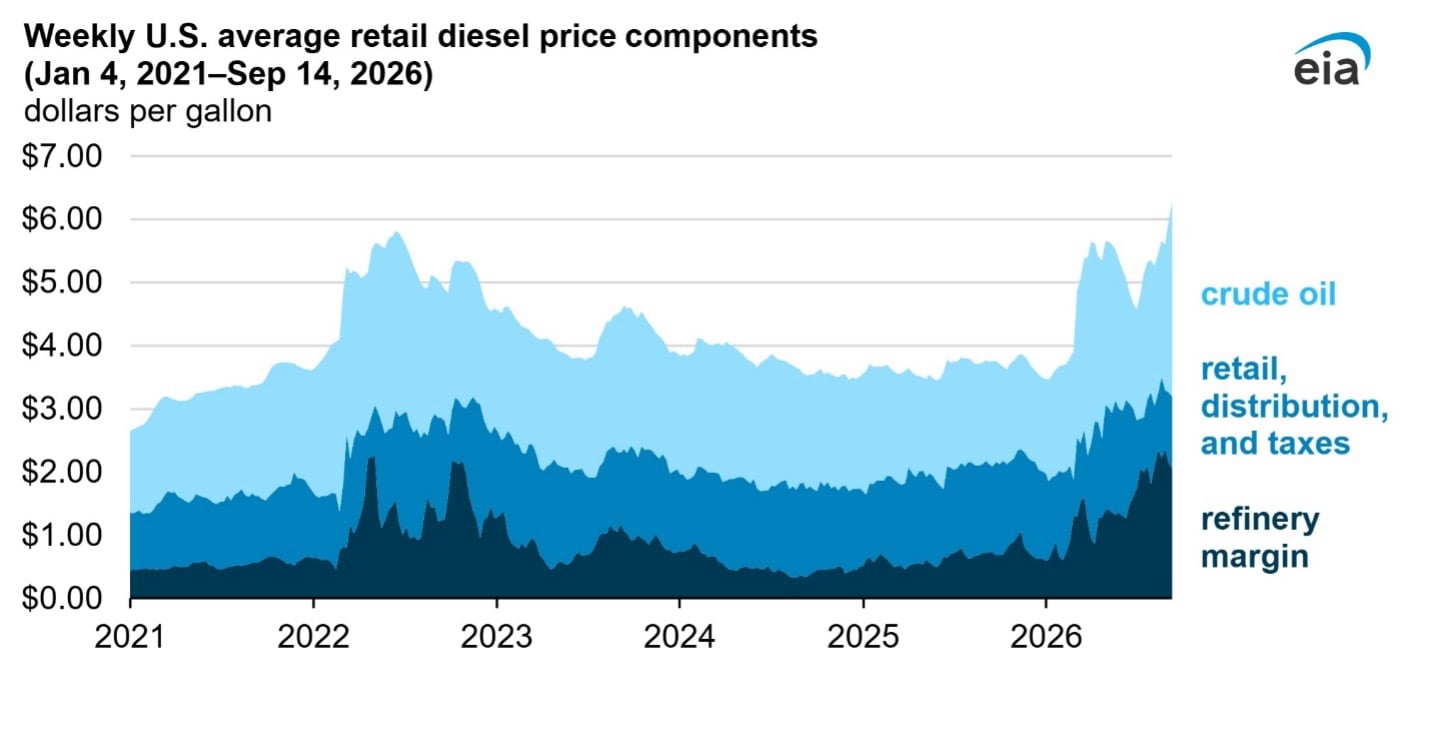
U.S. diesel prices broke records in September, raising concerns for consumers across the country. Solving the price problem will require boosting domestic fuel supply and production capacity. Biodiesel and renewable diesel producers are already contributing significant supply and investing in new capacity for the future because of this year’s historic RFS rule.
Diesel is the lifeblood of U.S. economic activity – it’s used in farming, construction, transportation of durable goods on road, rail, and water, and in home heating for parts of the country. Consumers who don’t directly pay for diesel at the pump can still see the costs reflected in prices at the grocery store, in their utility bills, and in everyday retail transactions.
U.S. diesel prices are high because global fuel prices are high, according to the U.S. Energy Information Administration. Even with U.S. refineries running at full capacity and enjoying near-record profit margins, there is a global shortage of finished fuel due to constrained petroleum refining capacity and distribution around the world. We may not import oil from countries that don’t like us, but they still have influence over our energy security.
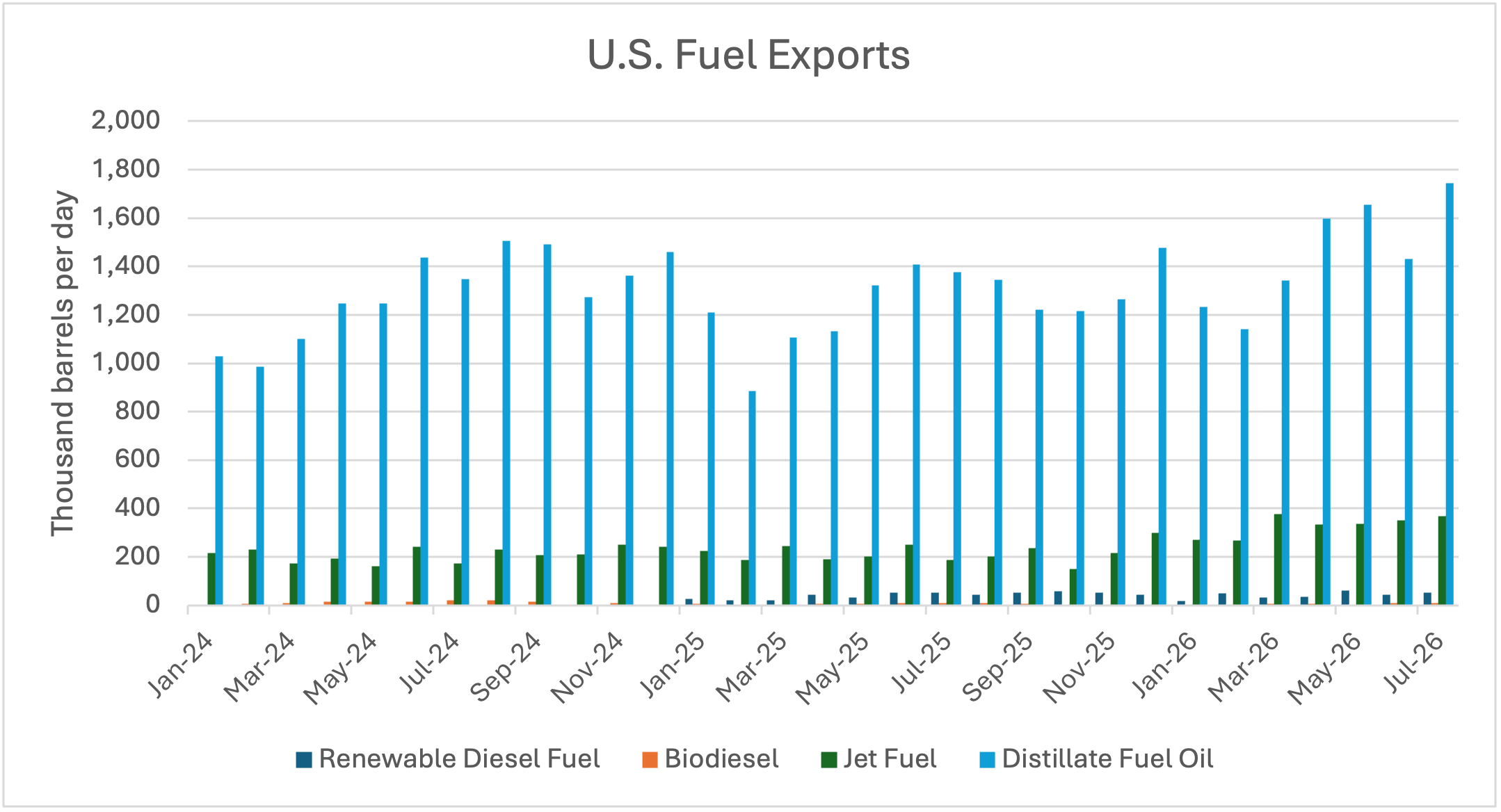
With the high global prices it’s no surprise that U.S. fuel exports have increased since the start of March 2026. Monthly U.S. distillate exports between March and July were almost 23% higher than the average since the start of 2024. And monthly U.S. jet fuel exports over the same time period were 45% higher than the average.
Combined with increased exports, U.S. refiners have adjusted their processes to maximize jet fuel production – to earn the highest margin return. There was a 2% decrease in the U.S. supply of petroleum distillates between March and July, as refiners maximized jet fuel supplies. But demand for diesel – reflected in the U.S. Energy Information Administration’s tally of fuel supplied to the market – remains steady. In economic terms, demand is inelastic. Therefore, increasing the supply of diesel is crucial to meet demand and maintain economic growth.
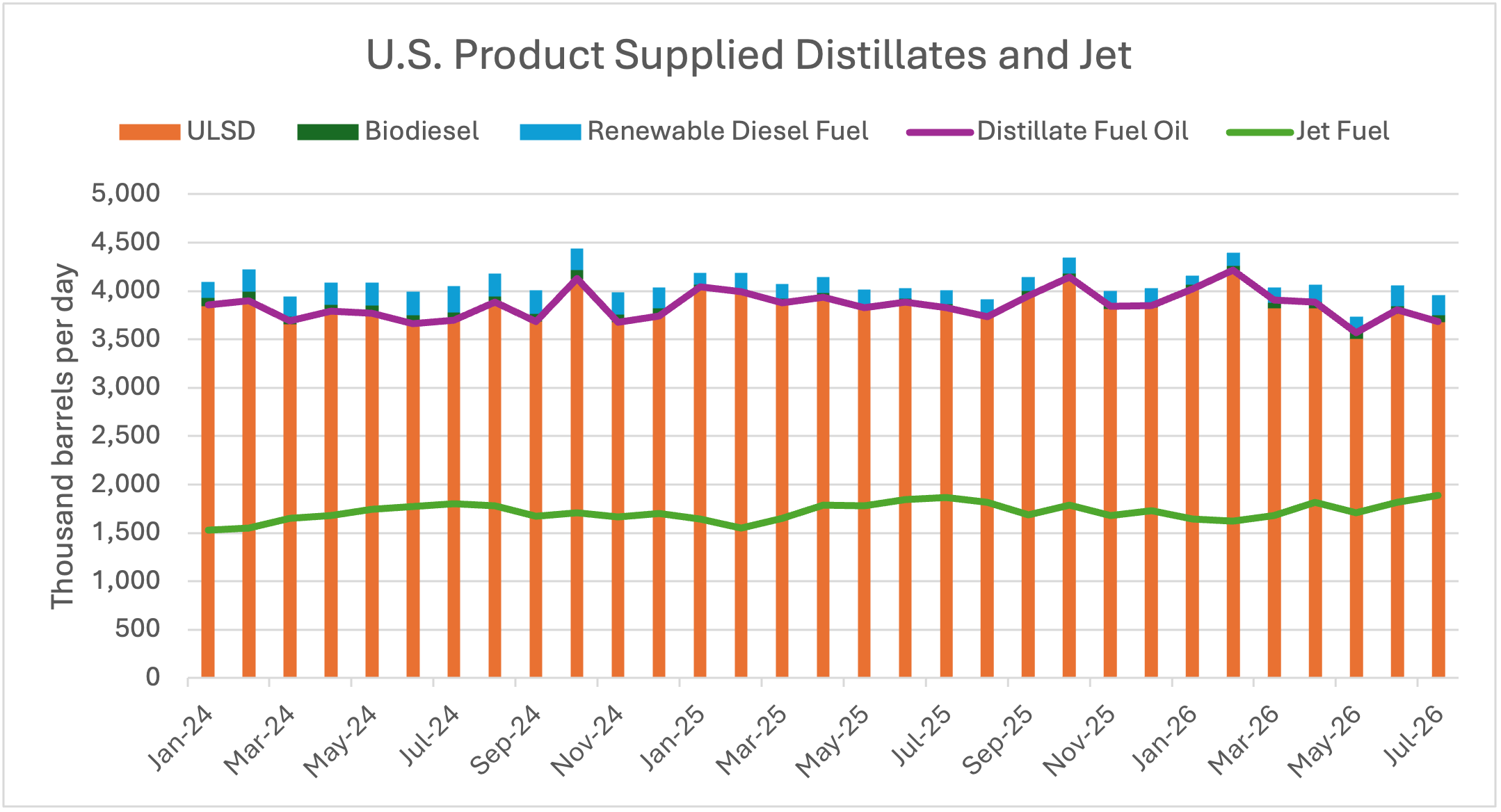
Biodiesel, renewable diesel, and SAF producers are adding a critical supply of drop in fuel to the U.S. diesel and jet fuel markets. In June and July, U.S. clean fuel producers achieved record production rates and added 8.6% to the supply of distillates in the U.S. market. That supply matched rates achieved in 2024.
Moreover, biodiesel and renewable diesel producers have increased capacity since 2024. In 2025, renewable diesel capacity increased by 245 million gallons per EIA. And in 2026, two new facilities opened – in Reno and Hawaii – adding another 100 million gallons of annual capacity. With 7 billion gallons of active capacity, the clean fuels industry can meet 10 percent of the nation’s demand for diesel fuel.
When President Trump launched the historic 2026-2027 Renewable Fuel Standard volumes last March, he stated the goal was to “massively increase our nation’s energy supply.” The Environmental Protection Agency also noted that the RFS rule was intended to drive maximum utilization of U.S. biodiesel and renewable diesel capacity. And the clean fuels industry is delivering as asked.
“These volumes reflect our assessment that the BBD industry is capable of achieving 90%+ capacity utilization.“
EPA, Regulatory Impact Analysis, Renewable Fuel Standards for 2026 and 2027
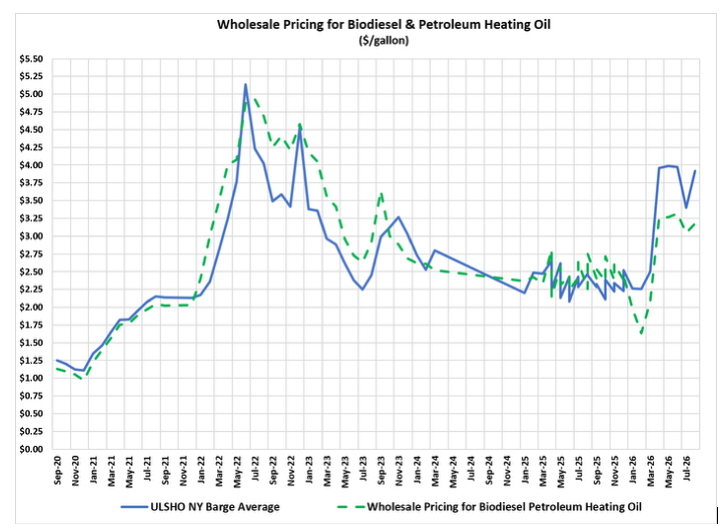
Most importantly, consumers can see the price benefits at the pump. Clean Fuels’ tracking of wholesale costs shows that biodiesel prices – adjusted for RFS and tax credit values – have been considerably lower than petroleum heating oil at New York Harbor throughout 2026. Per the Department of Energy, biodiesel cost California consumers as much as $0.25 per gallon less than diesel in the first quarter of the year.
The RFS and RIN values are working as intended to bring consumers better, cleaner fuels at a competitive cost. Recent small refinery exemptions prove that undermining the RFS will not benefit consumers.
On August 31, the Environmental Protection Agency announced exemptions for 29 small refineries for the 2025 RFS obligations. The agency exempted 13.4 billion gallons of U.S. gasoline and diesel from the RFS – roughly 7.5% of total annual gasoline and diesel supply. The 2025 RINs refiners retain for those exempted gallons will be used to avoid blending physical gallons in 2026 and 2027. And that means critical gallons of renewable diesel, biodiesel and other renewable fuels will be blocked from the U.S. market.
Following the exemptions, diesel prices continued to rise and supplies of distillate to the U.S. market continued to fall. None of the exempted refineries announced new investments or added capacity as they had promised. Restoring those exempted volumes as quickly as possible is the only way to quickly increase the U.S. supply of diesel fuel.
Before the end of October, EPA is expected to publish a proposal to restore the lost gallons. The rule will be open to public comment for a period and then EPA will have to finalize the rule. Timely final action before the end of the year will be crucial to addressing diesel supplies and prices, since biodiesel and renewable diesel producers will respond to the rule and the stability of the RFS program.
About the Author: As Chief Executive Officer, Donnell works closely with Clean Fuels’ board of directors to ensure the industry has a clear, sharp vision of the future – full of growth and opportunity for the members it serves. Donnell joined Clean Fuels in 2004 as its Chief Operating Officer and assumed the role of Chief Executive Officer in 2016. Donnell has a master’s in public administration from the University of Missouri – Columbia and a bachelor’s degree in Computer Information Systems from Missouri State University.
Category: Top Stories

