







The Digest’s 2026 Multi-Slide Guide to Feedstock Aggregation Logistics
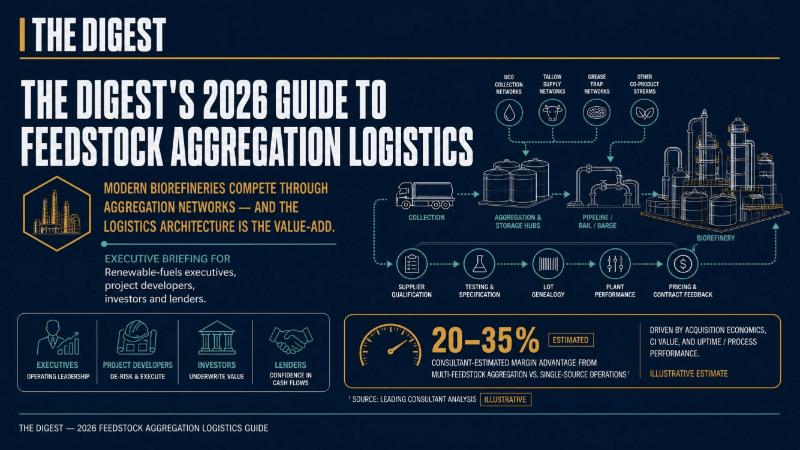
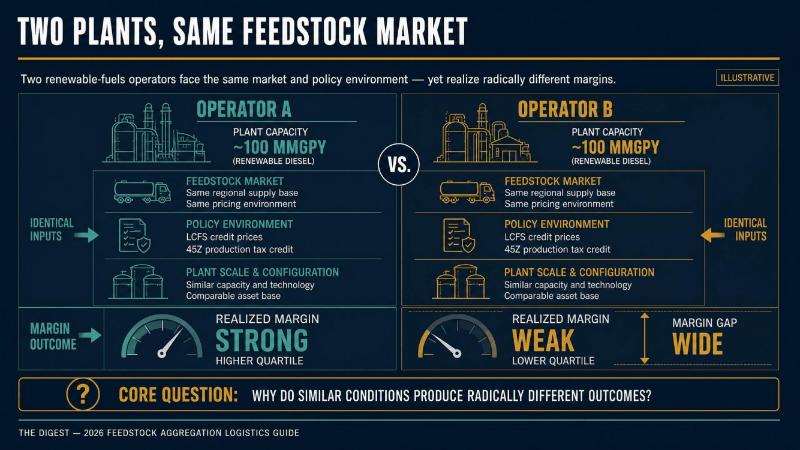
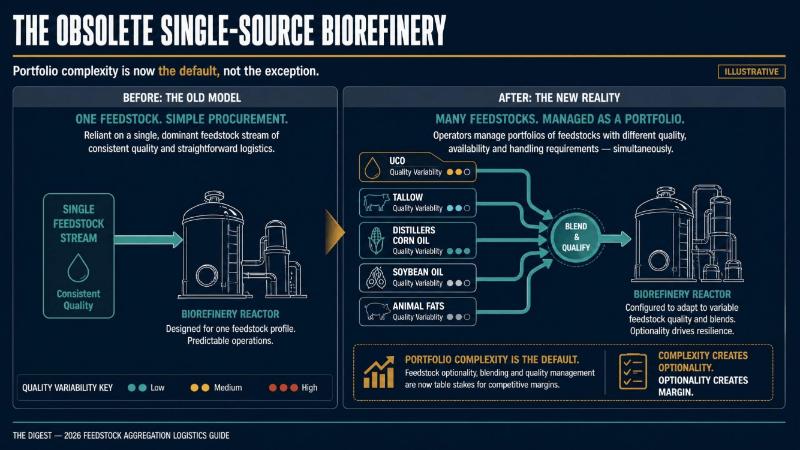
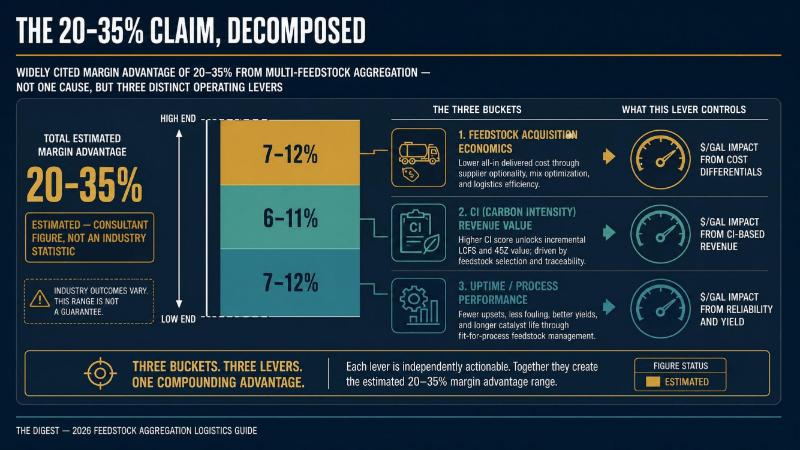
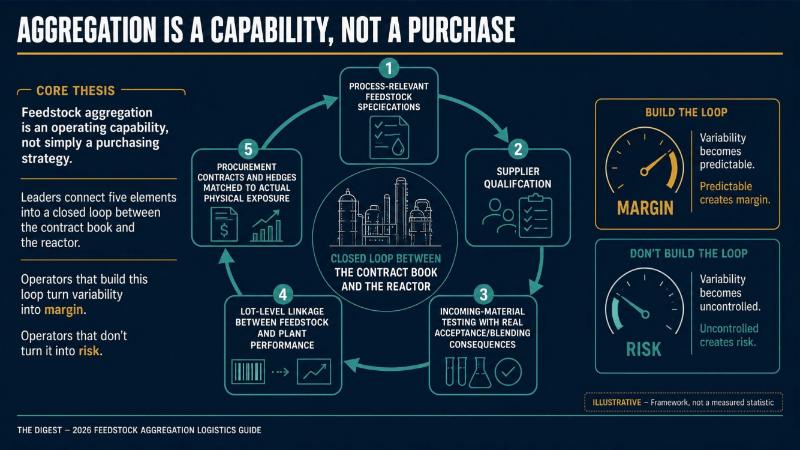
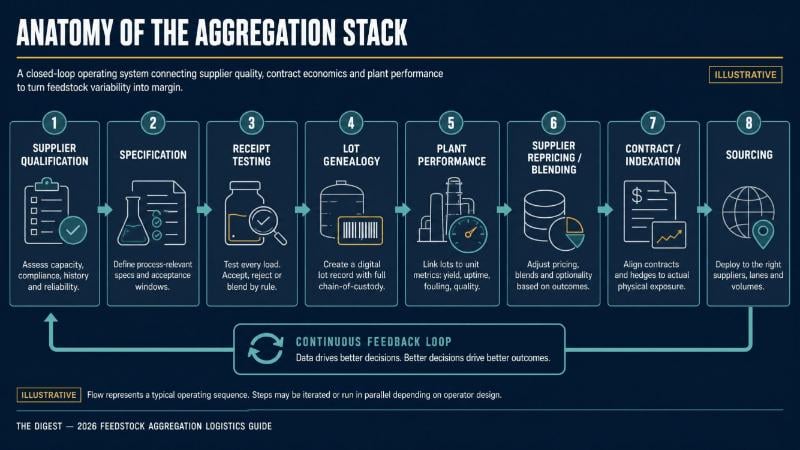
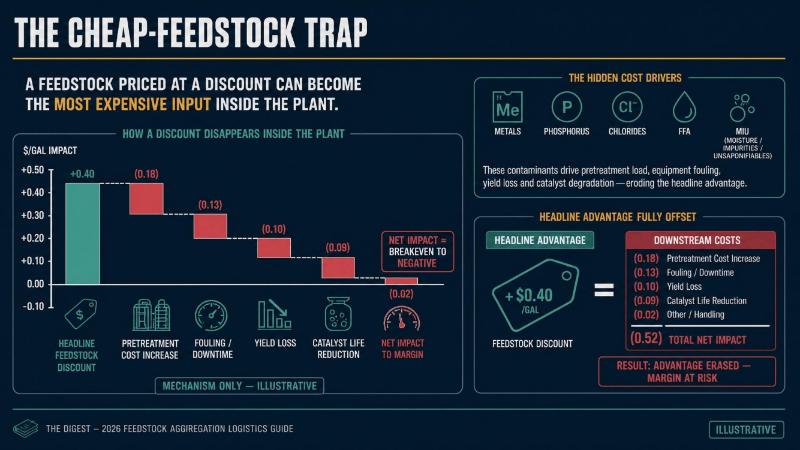
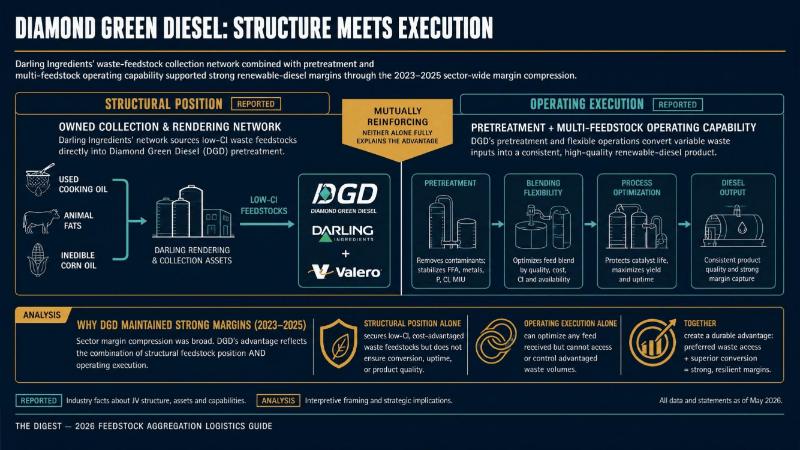
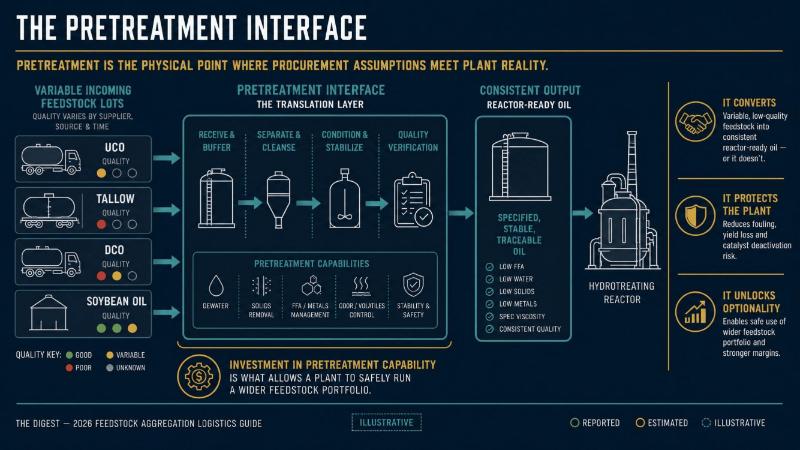
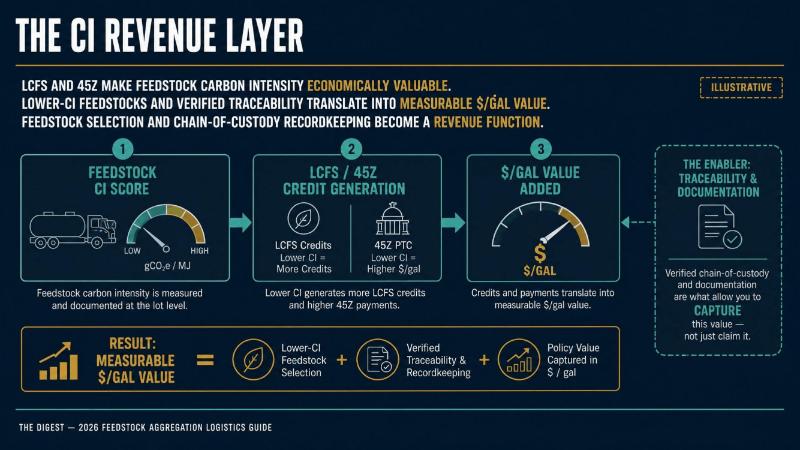
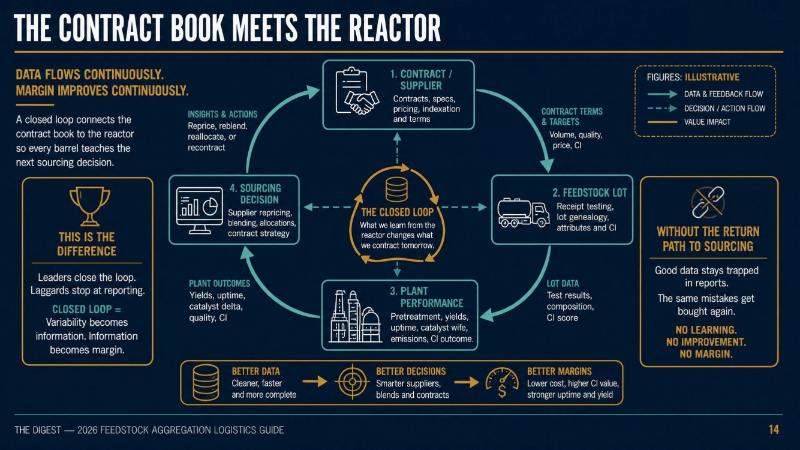
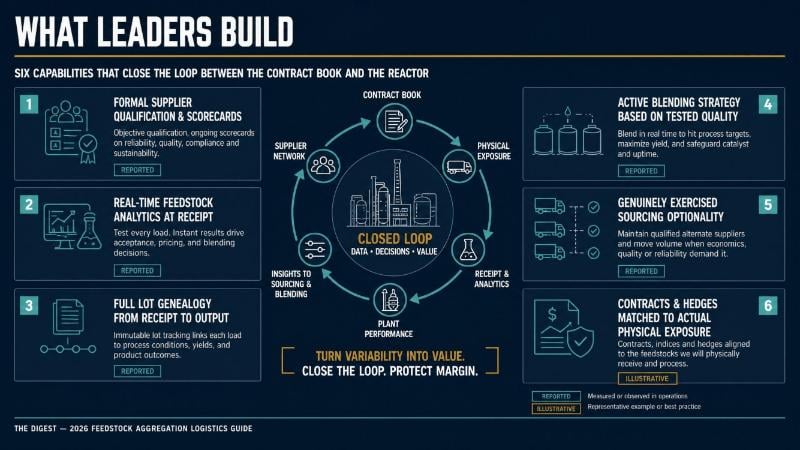
Modern biorefineries must transition from obsolete single-source models to multi-feedstock portfolio aggregation to survive. This capability unlocks an estimated twenty to thirty-five percent margin advantage through optimized acquisition economics, carbon-intensity revenue from LCFS and 45Z policies, and improved process performance. To avoid the “cheap-feedstock trap” where contaminants erode margin advantages, leaders must invest in robust pretreatment infrastructure and build a closed-loop operating system linking contracts, real-time testing, genealogy, and reactor performance.
 <!–nextpage—>
 <!–nextpage—>
 <!–nextpage—>
 <!–nextpage—>
 <!–nextpage—>
 <!–nextpage—>
 <!–nextpage—>
 <!–nextpage—>
 <!–nextpage—>
 <!–nextpage—>
 <!–nextpage—>
 <!–nextpage—>
 <!–nextpage—>
 <!–nextpage—>
 <!–nextpage—>
 <!–nextpage—>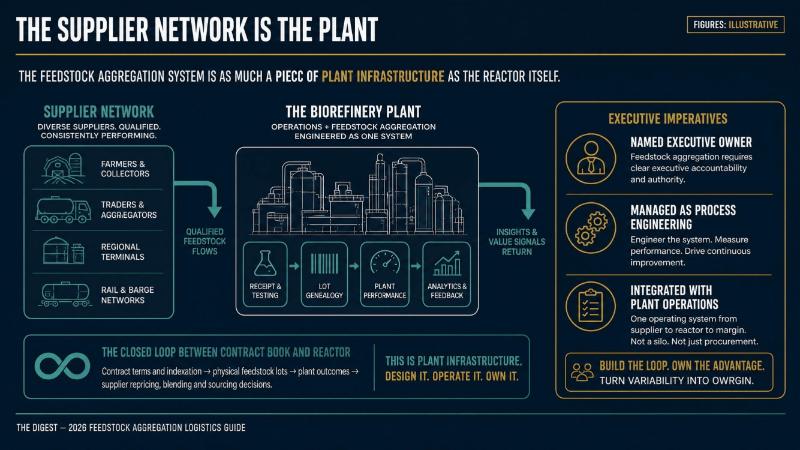
Category: Multi-Slide Guides

